Kent's newest novel

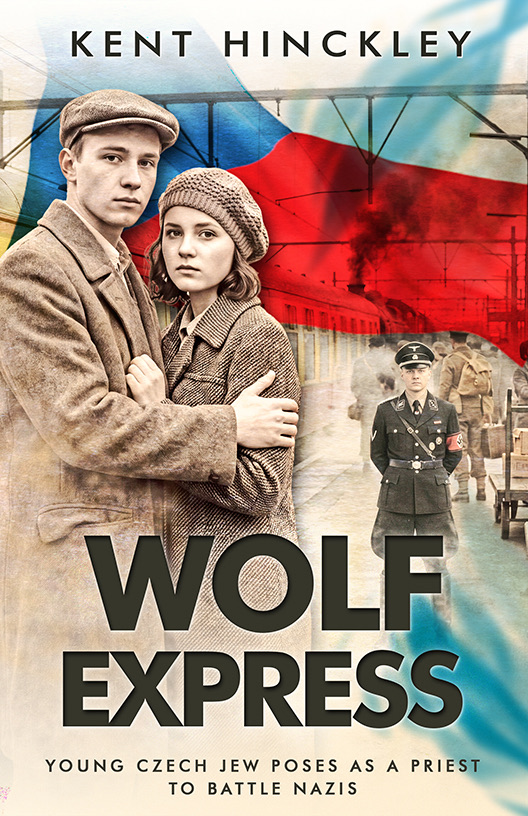
Wolf Express

Young Czech Jew Poses as a Priest to Battle Nazis

A coming-of-age story in occupied Czechoslovakia — Zev Kadish, a secular Jew disguised as a Catholic priest, leads Jews to Palestine by railroad, one step ahead of a Gestapo major who wants to destroy him.

Wolf Express book cover

Also by Kent Hinckley

Second Chance Against the Third Reich book cover

Second Chance Against the Third Reich

A U.S. Colonel's Fight to Save His Daughter from the Nazis

Prior to D-Day, Colonel Dirk Hoffman — suffering from shell shock (today known as PTSD) — learns from MI-6 that the Nazis will arrest his estranged daughter, who married an SS major in 1938. Hoffman goes behind enemy lines with the German Resistance to rescue her and lead their escape from Berlin, incurring the rage of an SS general obsessed with his capture. They overcome incredible odds to reach the safety of Switzerland — only to find a mole in U.S. Intelligence has set a trap to kill them.

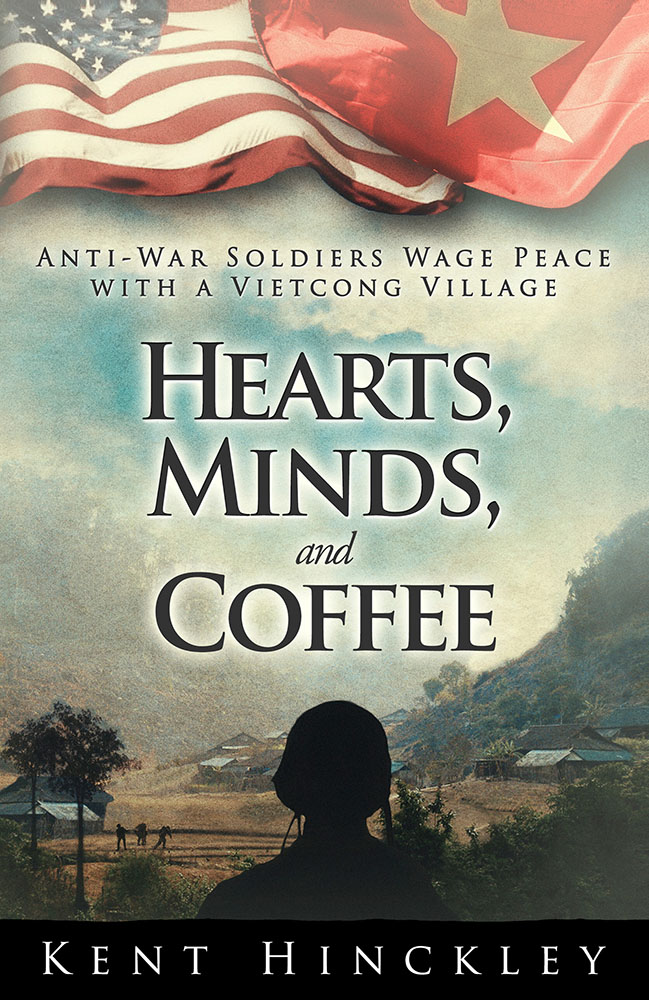
Hearts, Minds, and Coffee book cover

Hearts, Minds, and Coffee

Anti-War Soldiers Wage Peace with a Vietcong Village

The U.S. Army didn't like Slater Marshall's opposition to the Vietnam War, so it assigned him and three other dissidents to Viet Cong territory as a recon unit — expecting them to be killed. To survive, Slater followed his own rules and waged peace with the village of Phan Lac, the scene of the deaths of the previous recon unit. Little did he know he'd have to contend with the Viet Cong, and later a large North Vietnamese Army unit.

Kent on the stories behind the books

A few minutes with Kent Hinckley on the real history that shaped these novels — and why he had to write them.

Transcript

Welcome to the website. My name is Kent Hinckley, and I wrote the novel Hearts, Minds, and Coffee. People have frequently asked me, “Why did you write about Vietnam?” Believe me, I've asked myself the same question. I didn't want to dig up those memories.

One day, while writing a different story, the idea of enemies working in the central highlands popped into my head. Now I'm trying to forget Vietnam, but this story just wouldn't go away. Finally, I started writing it down.

In essence, four antiwar soldiers were assigned as a reconnaissance patrol in Vietcong territory to support a nearby American regiment. The higher-ups expected them to be killed, because that's what happened to the previous unit. To survive, these four misfits had to assume a different mindset from army training and deal with the local village, whose loyalties rested with the Vietcong.

The story is fictional, but the time coincided with my assignment to Nha Trang in 1969.

I gained three benefits from writing this novel. First, I made peace with my memories — or at least we established a truce. Second, I spoke with friends who had served in Vietnam and learned about their experiences; in the past, many were reluctant to talk about their tours of duty. And the third benefit: I got to honor three friends who died in the service of their country, and dedicated the book to them.

I hope you enjoy the story.